
Natural cosmetics
Humectants: What They Are and How They Work in Skincare
Apr
Humectants are one of the three fundamental pillars of skin hydration, along with emollients and occlusives. Understanding how these ingredients work and which are the most effective is essential for choosing the right products and building a hydration routine that really works for your skin type.
In this article, we’ll explore in depth what humectants are, how they work at a molecular level, which are the most effective according to dermatological research and how to use them correctly to get the most out of them.
What Is a Humectant? Definition and Mechanism of Action
A humectant is a cosmetic ingredient that can attract and hold water molecules. Its mechanism of action is based on hygroscopicity: the ability to absorb moisture from the environment and from the deeper layers of the skin, concentrating it in the stratum corneum (the outermost layer of the epidermis).
At a molecular level, humectants contain hydroxyl groups (-OH) and other polar functional groups that form hydrogen bonds with water molecules, «trapping» them on the skin’s surface. This process is essential for maintaining the skin’s surface hydration and, as a result, its elasticity, softness and barrier function.
According to a review published in the Indian Journal of Dermatology, humectants are the most important category of moisturising ingredients in dermocosmetics, as they directly address the most common cause of dry skin: transepidermal water loss (TEWL).
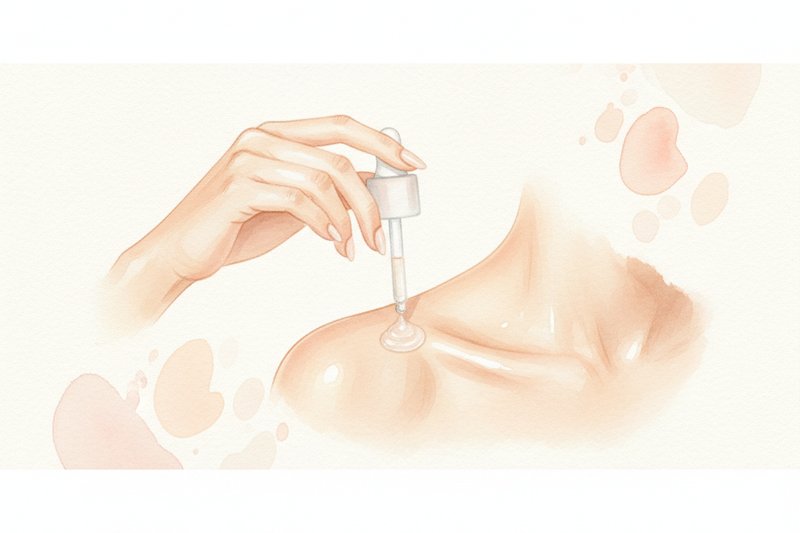
The Most Effective Humectants According to Science
Not all humectants are the same. Their effectiveness depends on their molecular size, their ability to hold water and their compatibility with skin biology:
| Humectant | Water-holding capacity | Additional benefit | Ideal for |
|---|---|---|---|
| Hyaluronic acid | Up to 1000x its weight in water | Plumps fine lines | All skin types |
| Glycerin | Very high (the benchmark humectant) | Strengthens the skin barrier | All types, especially dry |
| Urea | High + keratolytic effect | Gently exfoliates, softens | Dry skin, keratosis |
| Panthenol (Pro-Vit B5) | Moderate-high | Soothing, repairing | Sensitive, irritated skin |
| Sorbitol | Moderate | Pleasant, non-sticky texture | All skin types |
| Propylene glycol | High | Improves penetration of other actives | Non-sensitive skin |
| Betaine | Moderate-high | Natural osmoprotectant | Dehydrated skin |
🔬 SCIENTIFIC FACT: The skin loses between 300 and 400 ml of water a day through transepidermal water loss (TEWL). Humectants such as hyaluronic acid can hold up to 1000 times their weight in water.
Humectants vs. Emollients vs. Occlusives: The Three Pillars of Hydration
To understand the role of humectants, it’s essential to distinguish them from the other two categories of moisturising ingredients:
Humectants: Draw water from the environment and from the deeper layers of the skin to the surface
Emollients: Fill the gaps between the cells of the stratum corneum, softening and smoothing
Occlusives: Create a physical barrier that prevents water from evaporating
The best moisturisers combine ingredients from all three categories. However, the order of application is crucial: first humectants (to attract water), then emollients (to soften) and finally occlusives (to seal everything in). Many well-formulated creams include all three categories in a single product, in proportions adapted to the skin type.
👉 TIP: Effective hydration combines three types of ingredients: humectants (attract water), emollients (soften) and occlusives (seal in hydration). Look for formulas that include all three.
Hyaluronic Acid: The King of Humectants
Hyaluronic acid (HA) is the most popular humectant and probably the most researched in dermocosmetics. It is a glycosaminoglycan found naturally in the skin, where it is a fundamental component of the extracellular matrix of the dermis.
What makes HA special is its extraordinary water-holding capacity and its versatility depending on its molecular weight:
| Molecular weight | Penetration | Main effect |
|---|---|---|
| High (>1000 kDa) | Surface | Hydrating film, immediate effect |
| Medium (100-1000 kDa) | Superficial epidermis | Long-lasting hydration |
| Low (<100 kDa) | Deep epidermis | Stimulates regeneration, deep hydration |
The most complete formulas include HA of multiple molecular weights to hydrate at different depths at the same time.
⚠️ COMMON MISTAKE: Applying hyaluronic acid to completely dry skin. Humectants need to draw water from their surroundings, so they work best applied to slightly damp skin.
Glycerin: The Underrated Humectant
Glycerin (or glycerol) is possibly the most effective and best-tolerated humectant there is. According to a study published in the British Journal of Dermatology, glycerin not only attracts water but also:
- Supports the normal maturation of corneocytes (cells of the stratum corneum)
- Modulates the activity of aquaporins (water channels) in the skin
- Improves barrier function by keeping the intercellular «cement» hydrated
- Protects the skin from irritation caused by harsh surfactants
Despite these benefits, glycerin is often overshadowed by hyaluronic acid in cosmetics marketing. However, dermatologists consider it a fundamental ingredient in any moisturising formula.
How to Use Humectants Correctly
Using humectants incorrectly can, paradoxically, dehydrate the skin. This happens when they are applied in a very dry environment without being sealed in with an emollient or occlusive: finding no moisture in the air, humectants draw water from the deeper layers of the skin, making dehydration worse.
The golden rule of humectants:
Always seal humectants in with an emollient or cream. Apply the serum or toner containing humectants to slightly damp skin and, before it dries, apply a cream containing emollients (ceramides, squalane) and/or occlusives to stop the water it has drawn in from evaporating.
In humid environments (over 50% relative humidity), humectants work optimally by drawing water from the air. In dry environments (central heating, air conditioning, arid climates), sealing them in with a cream is essential to avoid the opposite effect.
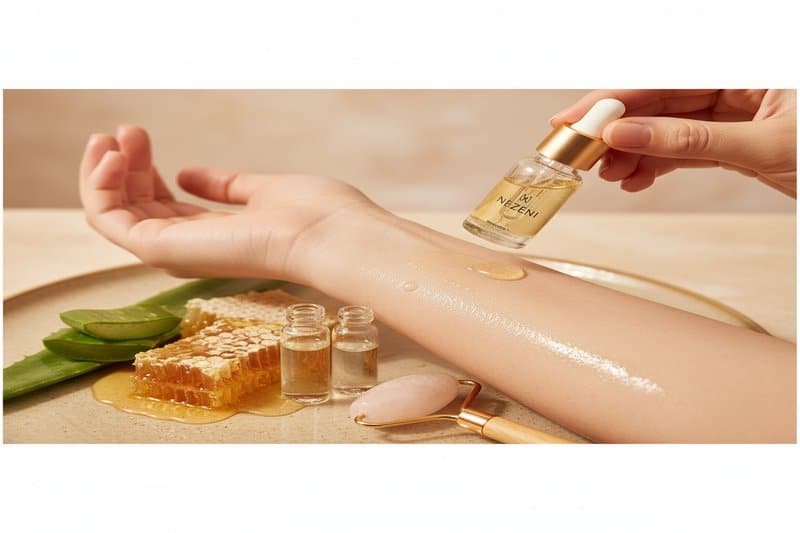
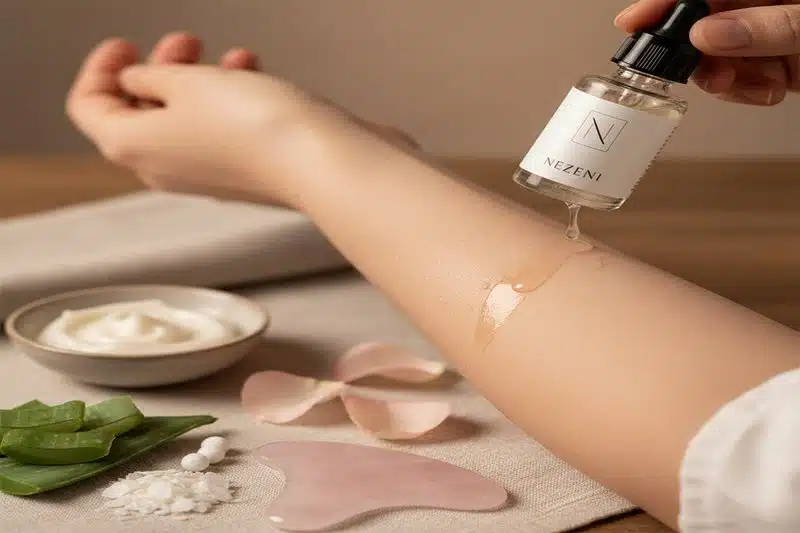
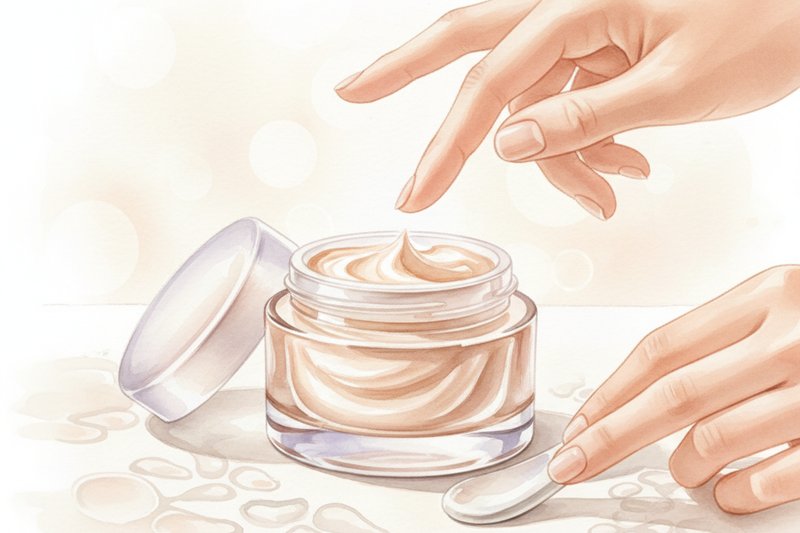
Humectants in Nezeni Products: Real High Concentrations
A humectant’s effectiveness depends directly on its concentration in the formula. Many commercial products include hyaluronic acid or glycerin in token amounts (0.01-0.1%) that are not enough to have a real effect.

Organic Aloe Vera (73.60%) Moisturiser – Sensitive and/or Dry Skin – 50 ml
With 73.60% organic aloe vera, one of the most powerful natural humectants. Formulated with the Nezeni philosophy of a high proportion of actives and minimal preservatives (2-year shelf life), this cream provides humectants, emollients and occlusives in balanced proportions.

Defending Water Toner – All Skin Types – 200ml
A toner with humectants that provide the first layer of hydration after cleansing, preparing the skin to absorb the actives that follow and strengthening the skin barrier.
Humectants and Skin Types: A Personalised Guide
Dry skin: Needs powerful humectants (multi-weight hyaluronic acid, glycerin, 5% urea) combined with rich emollients and occlusives to seal in hydration. Dry skin often has a compromised skin barrier, so holding on to hydration is the main challenge.
Oily skin: Light humectants (hyaluronic acid, betaine, sorbitol) are ideal because they provide hydration without adding oil. Oily skin is often dehydrated (lacking water, not oil), and humectants address exactly that shortfall.
Combination skin: Benefits from versatile humectants such as hyaluronic acid. You can apply a humectant serum all over your face and a richer cream only on the dry areas.
Sensitive skin: Gentle, non-irritating humectants such as panthenol, betaine and glycerin. Avoid propylene glycol, which can cause sensitisation in reactive skin.
Mature skin: Hyaluronic acid is especially valuable here: with age, natural HA production decreases (at 50, skin contains half the HA it did at 20), and topical supplementation helps plump fine lines and improve overall hydration.
The Body’s Own Natural Humectants: Natural Moisturising Factor (NMF)
The skin naturally produces its own humectants. Together, these substances are called Natural Moisturising Factor (NMF), a complex mixture of amino acids, pyrrolidone carboxylic acid (PCA), lactate, urea, mineral ions and other water-soluble compounds that make up 20-30% of the dry weight of the stratum corneum.
According to research published in the International Journal of Cosmetic Science, loss of NMF is one of the main causes of dry skin and is associated with:
- Excessive washing with harsh cleansing products
- Chronological ageing (NMF production decreases with age)
- Sustained low ambient humidity
- Atopic dermatitis and other inflammatory conditions
The most effective cosmetic humectants are those that mimic or complement the components of NMF. For example, sodium PCA, amino acids such as serine and proline, and hyaluronic acid are ingredients the skin recognises as its own, improving their absorption and tolerance.
The Importance of Water in Barrier Function
The water content of the stratum corneum isn’t just a cosmetic matter; it’s fundamental to the skin’s biological function. A well-hydrated stratum corneum (with a water content above 10%) keeps active the enzymes that regulate natural shedding, the synthesis of intercellular lipids and antimicrobial defence.
When the water content drops below 10%, the clinical condition known as xerosis occurs: the skin becomes rough, scaly, tight and even itchy. In this state, the skin barrier is compromised, increasing vulnerability to irritants, allergens and pathogens.
Humectants tackle this problem directly by increasing and maintaining the water content of the stratum corneum. However, as we’ve mentioned, they should always be combined with emollients (which soften and fill the intercellular spaces) and, in many cases, with occlusives (which seal in moisture) for a complete, long-lasting effect.
Humectants and Climate: Adapting Your Routine to Your Environment
Climate and ambient humidity have a direct influence on how humectants work on the skin:
Humid climate (>60% relative humidity): Humectants work optimally, drawing plenty of water from the environment. In these conditions, a hyaluronic acid serum and a light moisturiser may be enough for most skin types.
Dry climate (<30% relative humidity): Humectants on their own can backfire. It’s essential to seal them in immediately with a cream rich in emollients and occlusives. In extremely dry climates, creams with ceramides, shea butter or petroleum jelly as a final occlusive are the best protection.
Heated or air-conditioned environments: These act as artificial dry climates. A humidifier in the room can significantly improve the effectiveness of your topical humectants by providing the ambient moisture they need to work.
In every case, Nezeni Cosmetics’ formulation philosophy, which prioritises a high proportion of functional actives with a minimal preservative system and a 2-year shelf life, ensures that every product contains real, effective concentrations of humectants, not the token amounts typical of many commercial formulas.
Understanding the science of humectants transforms the way we approach skin hydration. It’s no longer simply a matter of applying cream, but of understanding that hydration is a dynamic system that requires specific ingredients working in synergy with the environment and the skin’s own biology.
Frequently Asked Questions about Humectants for the Skin
Can hyaluronic acid make dehydration worse?
Yes, if it’s applied in a very dry environment without being sealed in with a cream. In these conditions, HA can draw water from the deeper layers of the skin. The solution is always to apply a moisturiser on top.
Are dry skin and dehydrated skin the same thing?
No. Dry skin lacks lipids (oils) and needs emollients. Dehydrated skin lacks water and needs humectants. Any skin type (even oily) can be dehydrated. Skin can be both oily and dehydrated at the same time.
How many times a day should I apply a humectant?
At least twice (morning and night), as part of your complete routine. In particularly dry environments or after exfoliating treatments, you may benefit from an extra application during the day with a facial mist followed by cream.
Does drinking more water hydrate your skin?
Internal hydration is necessary for general health, but drinking more water doesn’t translate directly into more hydrated skin, unless you’re chronically dehydrated. Topical hydration (humectants + emollients) is more effective for the skin’s surface.
Do humectants clog pores?
No. Humectants are water-soluble and non-comedogenic. Hyaluronic acid, glycerin, panthenol and betaine are safe for acne-prone skin.
For personalised advice, contact attcliente@nezeni.com.
References:
1. Sethi A et al. Moisturizers: The Slippery Road. Indian J Dermatol. 2016;61(3):279-287. PubMed 27293245.
2. Fluhr JW et al. Glycerol and the skin. Br J Dermatol. 2008;159(1):23-34. PubMed 18510666.
3. Papakonstantinou E et al. Hyaluronic acid: A key molecule in skin aging. Dermatoendocrinol. 2012;4(3):253-258. PubMed 23467280.
4. Lodén M. The clinical benefit of moisturizers. J Eur Acad Dermatol. 2005. PubMed 16268870.
5. Elias PM. Skin barrier function. Curr Allergy Asthma Rep. 2008. PubMed 18606081.
Updated March 2026